GraphAlg Presented at Dutch-Belgian Database Day 2025


Workshop

GraphAlg Presented at Dutch-Belgian Database Day 2025

By Stefania Amodeo

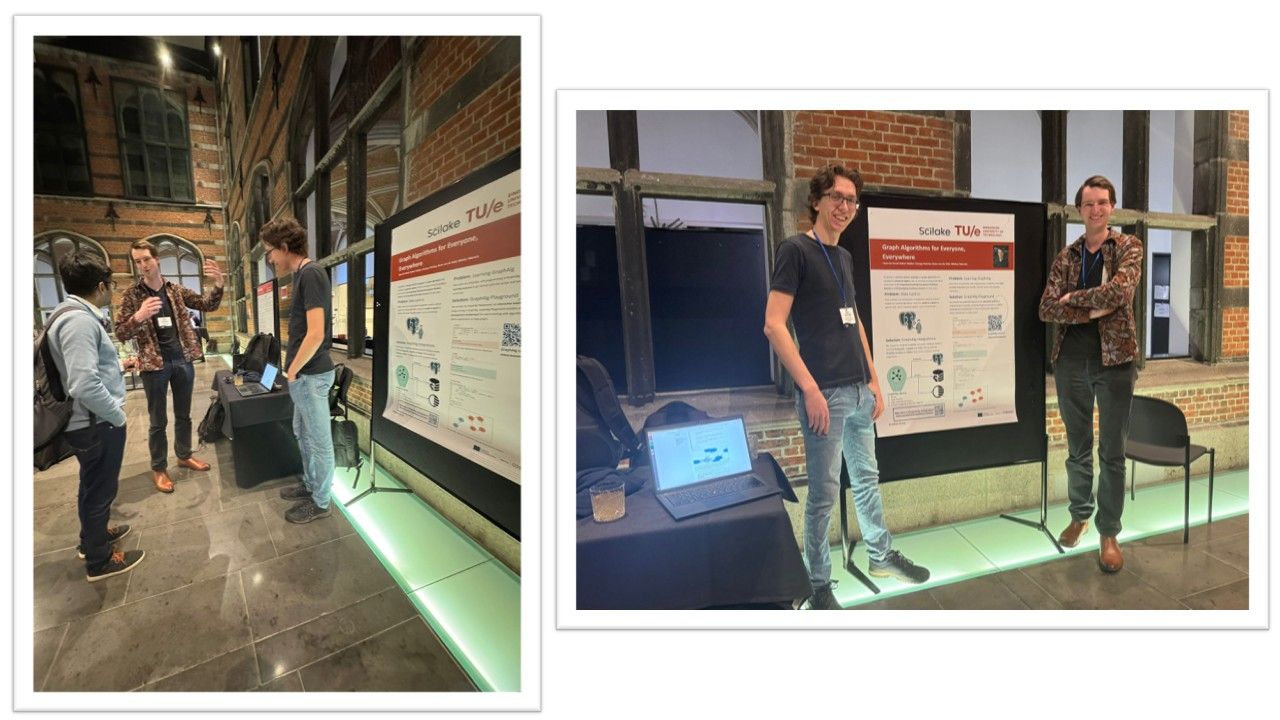
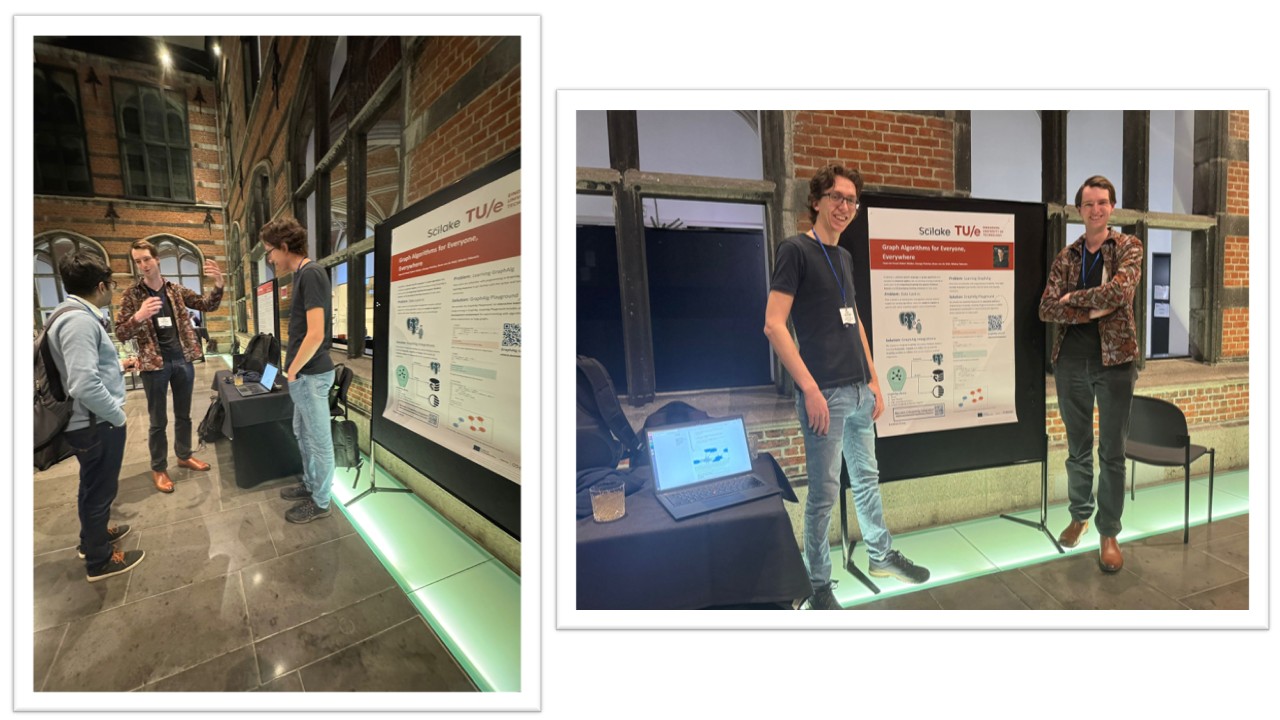
SciLake partner Daan de Graaf from TU Eindhoven presented his work on graph algorithm support in AvantGraph at the Dutch-Belgian Database Day (DBDBD) 2025, held on December 12, 2025, at the University of Antwerp.

His paper, titled Graph Algorithms for Everyone, Everywhere, introduced GraphAlg, an open-source project developed within SciLake, designed to make graph algorithms accessible to researchers, developers, and students. During the conference, Daan presented a poster and conducted live demos, allowing participants to interact with the GraphAlg tutorial and explore its capabilities firsthand.

About GraphAlg

GraphAlg is a domain-specific language for graph algorithms that compiles to relational algebra, making advanced graph analysis accessible directly within database systems.

GraphAlg is now open source, making it easier than ever to work with graph algorithms. We built it for researchers, developers, and students who want to dive into graph theory without the usual steep learning curve. The project includes hands-on tools and tutorials to help you get started quickly.

Key Resources

Congratulations to the TUe team on this achievement! We are proud to see our research making an impact in the database and graph algorithm communities.

Read more …GraphAlg Presented at Dutch-Belgian Database Day 2025

SciLake at EBRAINS Summit 2025


Workshop

SciLake at EBRAINS Summit 2025

By Archana Golla and Stefania Amodeo

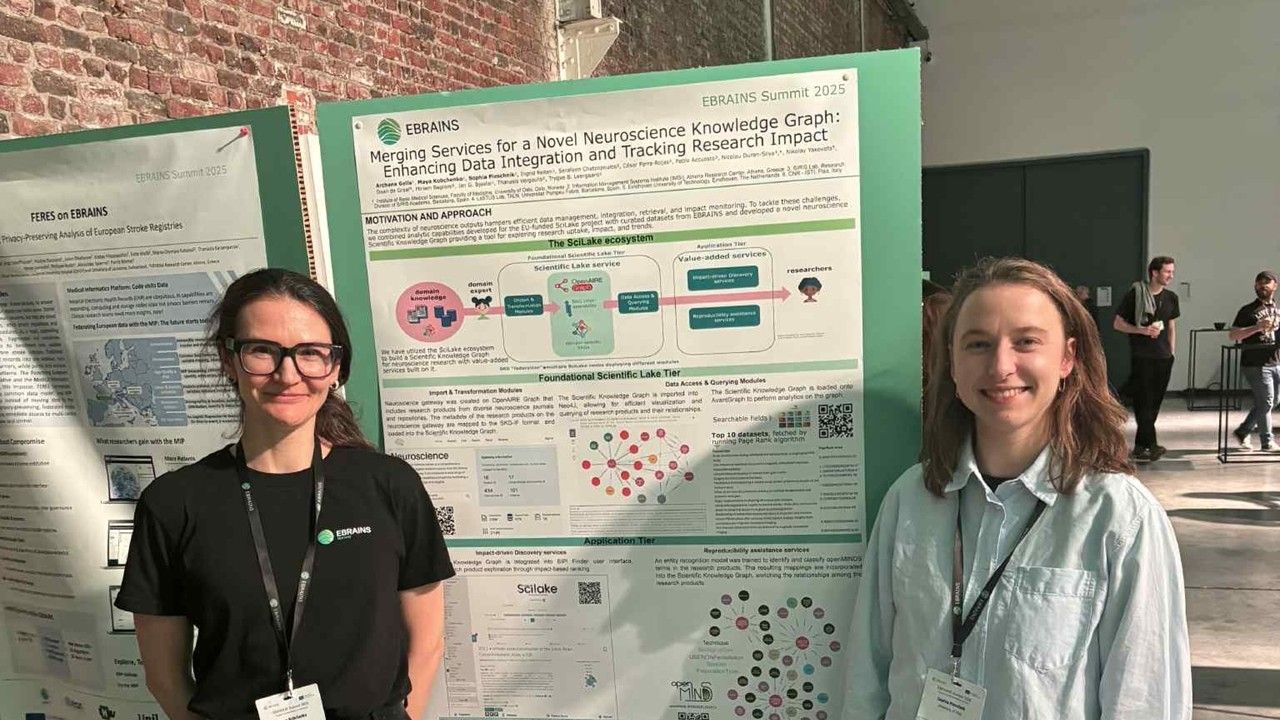
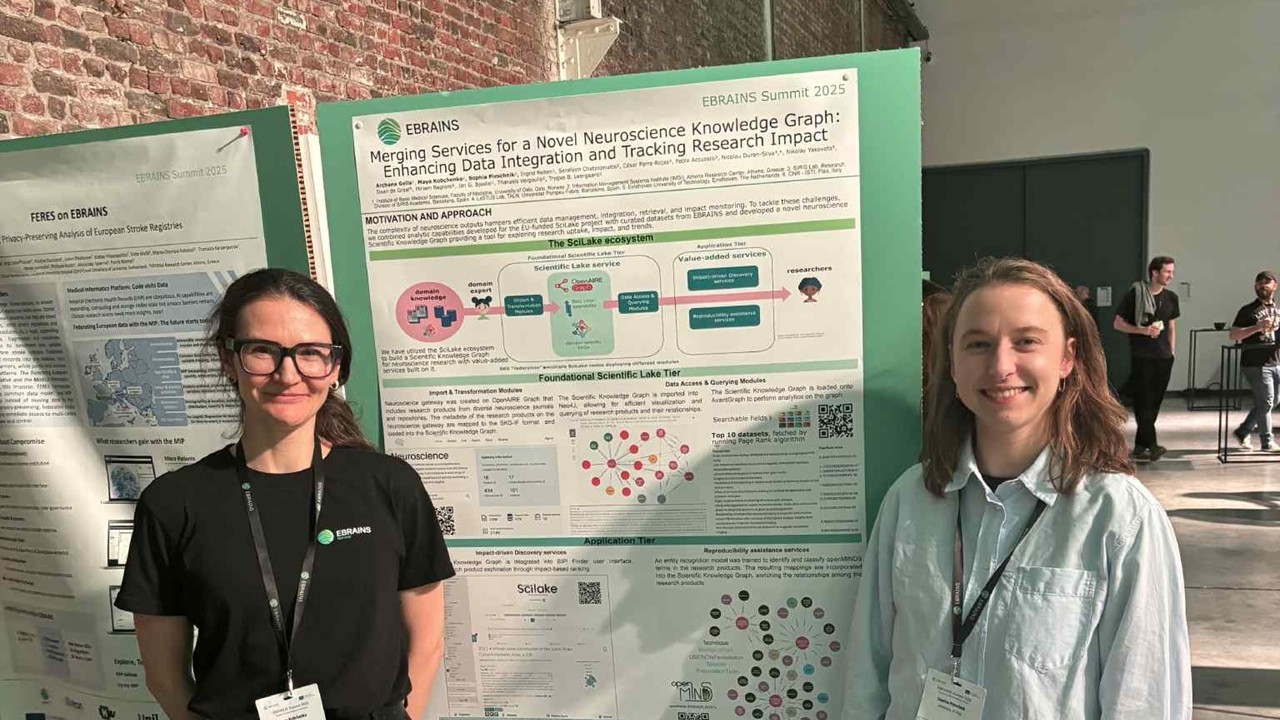
In December 2025, we presented the SciLake project at the EBRAINS Summit in Brussels, a major event bringing together researchers, clinicians, and tech developers from across Europe's brain-science community. Maya Kobchenko and Sophia Pieschnik represented our team, sharing how we are building a Scientific Knowledge Graph specifically designed for neuroscience research.

About the EBRAINS Summit

The EBRAINS Summit 2025 – Transforming Brain Research and Medicine took place from December 8-11 in Brussels. The event brought together researchers, clinicians, and technology developers to showcase how EBRAINS' infrastructure advances neuroscience and drives innovation across the field. The program featured scientific talks, poster sessions, a science market exhibition, and a dedicated public day. A key theme throughout was the importance of cross-disciplinary collaboration, FAIR data practices, and interoperable tools, all values that align closely with SciLake's mission.

Our Contribution: A Neuroscience-Focused Scientific Knowledge Graph

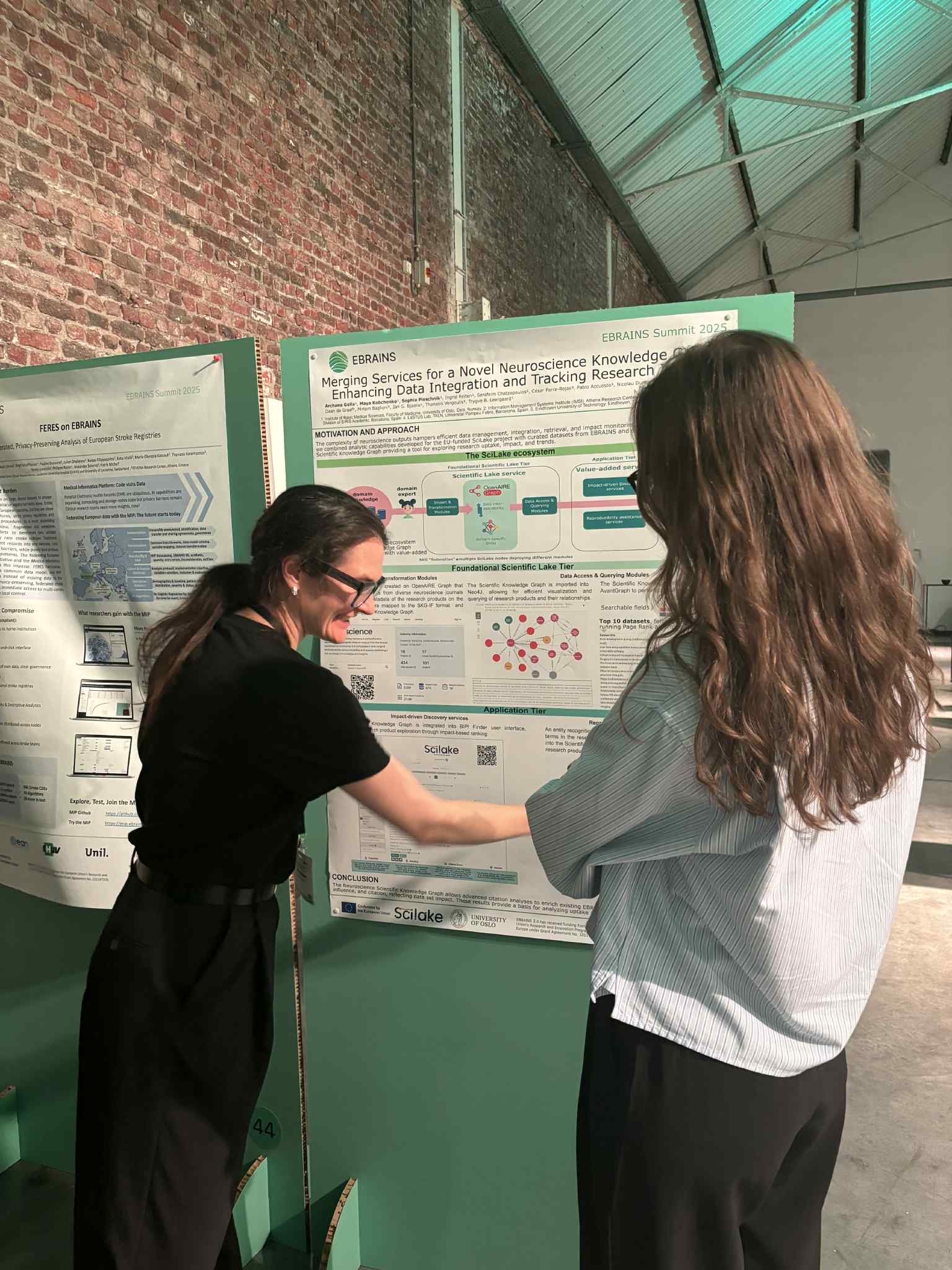
SciLake's poster presentation was delivered by Maya Kobchenko and Sophia Pieschnik from the University of Oslo, highlighting our merged service architecture that powers a domain-specific Scientific Knowledge Graph for neuroscience.

Built on the SciLake ecosystem, our workflow integrates a neuroscience gateway derived from the OpenAIRE Graph, maps metadata to the SKG-IF format, and loads it into graph engines including Neo4J and AvantGraph for efficient visualization, querying, and analytics.

The application tier delivers impact-driven discovery through BIP! Finder's indicators, measuring popularity, influence, impulse, and citation count. To strengthen reproducibility, we employed a trained entity-recognition model that classifies openMINDS terms, enriching the relationships among research products and enabling more nuanced exploration of the neuroscience literature landscape.

For SciLake, the Summit represented an invaluable opportunity to showcase the advances in our neuroscience pilot to domain experts. 

Resources

Our poster abstract (no. 45) can be found in the official Book of Abstracts.

We invite researchers interested in exploring our neuroscience-focused Scientific Knowledge Graph to learn more through the SciLake neuroscience case study page.

Read more …SciLake at EBRAINS Summit 2025

Open Science in Transport Research: SciLake Pilots at ICTR 2025


Workshop

Open Science in Transport Research: SciLake Pilots at ICTR 2025

By Afroditi Anagnostopoulou, Athanasios Ballis, Xenophon Kitsios, Stefania Amodeo

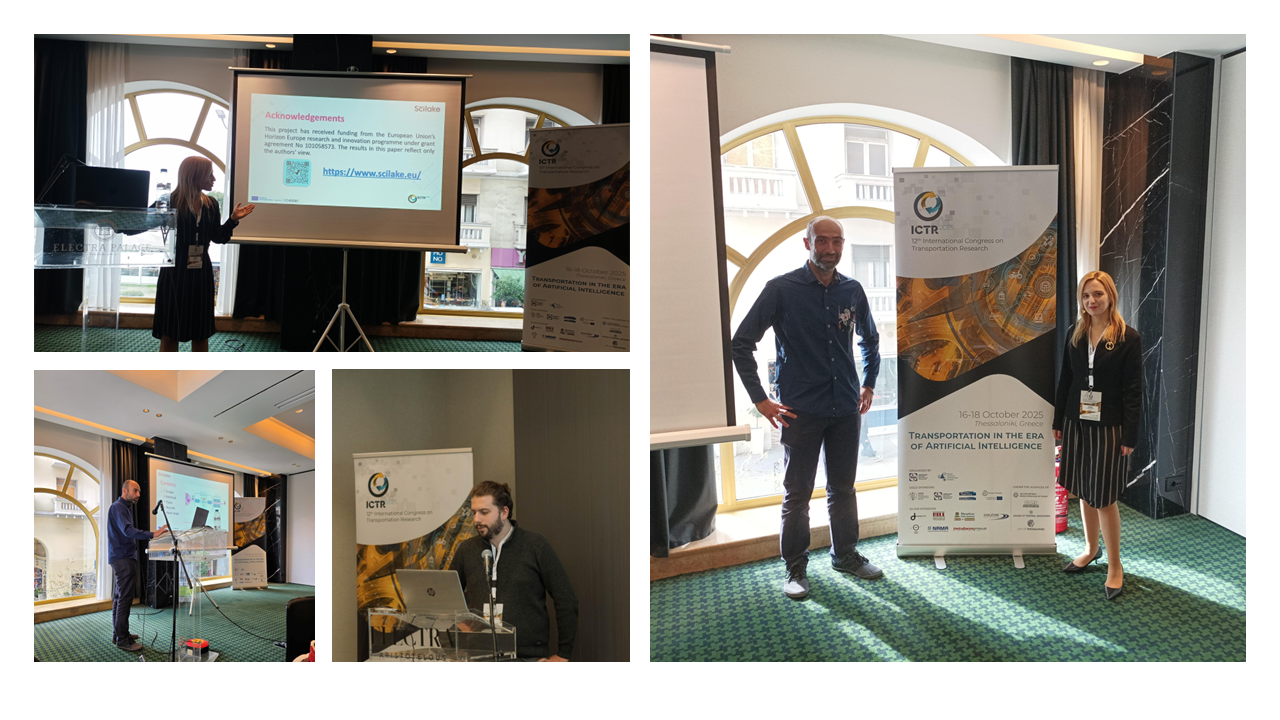
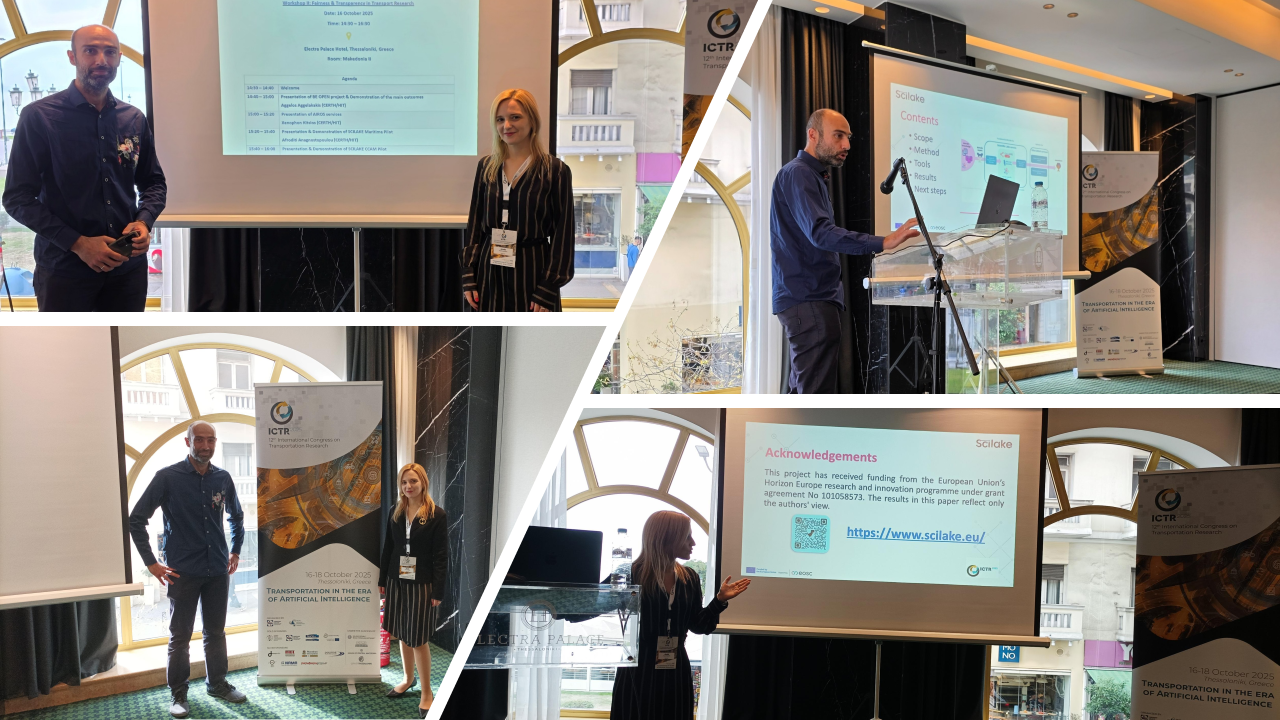
The SciLake project made a significant impact at the 12th International Congress on Transportation Research (ICTR 2025), held October 16–18, 2025, in Thessaloniki, Greece. Our partners from CERTH/HIT and ICCS organized a dedicated workshop and presented a conference paper highlighting how SciLake tools are advancing open science practices in transport research.

Workshop: Fairness & Transparency in Transport Research

On October 16, SciLake partners co-organized an engaging workshop titled "Fairness & Transparency in Transport Research." The event brought together 15 stakeholders from academia, industry and public authorities to explore how FAIR principles can transform transport research.

The workshop featured:

  • Keynote presentations on Open Science and FAIR principles in transport research
  • Live demonstrations of SciLake tools through the Maritime and CCAM (Cooperative Connected Automated Mobility) pilot cases, showcasing how Knowledge Graphs enable semantic connections between research data
  • Interactive discussions where participants shared insights and recommendations for implementing FAIR principles

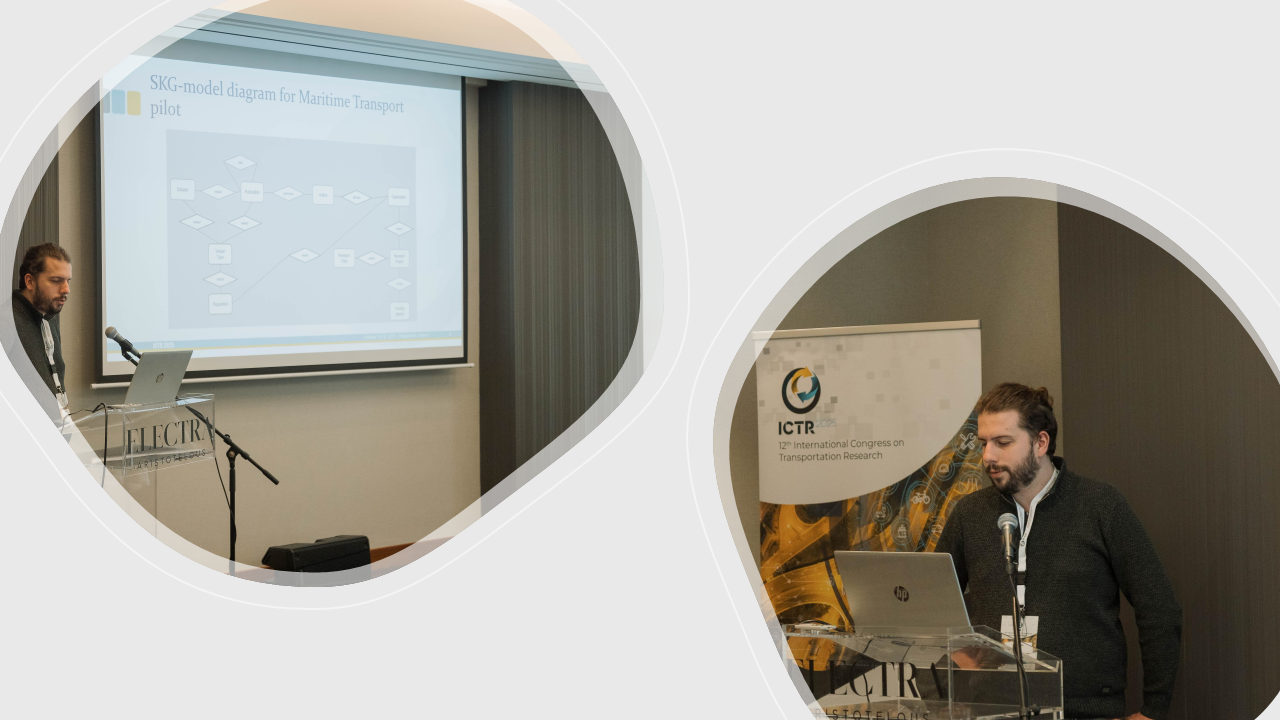
Afroditi Anagnostopoulou from CERTH/HIT presented the Maritime pilot, demonstrating how SciLake services, powered by Knowledge Graph infrastructure, enable researchers to access and share maritime transport data more effectively while maintaining semantic relationships. Athanasios Ballis from ICCS showcased the CCAM pilot, highlighting tools that promote transparency in autonomous vehicle research through graph-based data visualization.

Conference Paper: Open Science Insights from Maritime and CCAM Pilots

We also presented a research paper entitled "Open Science in Transport Research: Insights from the Maritime and CCAM Pilot Cases," co-authored by Afroditi Anagnostopoulou (CERTH/HIT), Athanasios Ballis (ICCS), Xenophon Kitsios (CERTH/HIT), Anastasia Bolovinou (ICCS), Vassilis Kappatos (CERTH/HIT), and Angelos Amditis (ICCS).

The paper demonstrates how FAIR data principles and Open Science practices can be implemented in transport research through two pilot cases. Central to this implementation is the use of semantic Knowledge Graphs that connect disparate data sources and enable researchers to discover relationships across datasets. The Maritime pilot addresses challenges of interoperability and data access, aiming to improve operational efficiency and situational awareness through digital platforms, open standards, and graph-based data structures. The CCAM pilot focuses on secure and equitable data sharing for automated transportation systems, promoting better collaboration between academia, industry, and public stakeholders through semantic knowledge representation.

Key findings from the paper include:

  • Trust and transparency are operationalized through provenance tracking, citation context extraction, and graphical visualization of data links enabled by Knowledge Graph technologies
  • Common challenges across both sectors include fragmented data ownership, limited interoperability, and institutional reluctance to share data
  • SciLake's modular digital tools, including AvantGraph, Lake API, and SciNoBo, significantly mitigated these hurdles by offering explainable analyses, interoperable data access, and semantic Knowledge Graph capabilities that reveal hidden connections in research data
  • Legal frameworks such as GDPR and EU data law play a crucial role alongside technical infrastructure in realizing FAIR principles

The paper's recommendations emphasize:

  • Expanding standardization efforts to ensure consistency across transport sub-sectors, leveraging Knowledge Graphs to harmonize domain-specific semantics
  • Involving broader stakeholder groups in co-designing data governance models
  • Investing in infrastructure that supports transparency, interoperability, and reuse through semantic technologies
  • Policy incentives to encourage private sector participation while ensuring data privacy and ethical compliance

Rather than presenting Open Science as a one-size-fits-all solution, the paper highlights the importance of domain-specific configurations of FAIR principles. Knowledge Graphs emerge as a critical enabler for capturing domain semantics while maintaining interoperability. The authors conclude that the shift towards more open, inclusive, and data-driven transport research is not only possible, but already underway when supported by aligned strategies, adaptive technologies, and semantic knowledge representation.

About ICTR 2025

ICTR 2025, co-organized by the Hellenic Institute of Transport (CERTH-HIT) and the Hellenic Institute of Transportation Engineers (HITE), focused on "Transportation in the Era of Artificial Intelligence." The conference has been a cornerstone of transportation research for 23 years, bringing together local and international communities to bridge research findings with policymaking efforts.

The event explored how AI is transforming transportation through advancements in autonomous vehicles, smart infrastructure, sustainability, and supply chain optimization: themes that align closely with SciLake's mission to make research data more accessible and actionable through Knowledge Graph technologies.

Impact and Next Steps

Feedback from participants emphasized the need for improved data accessibility and transparency in an increasingly digitalized transport sector. The results will be documented in SciLake deliverables, with follow-up activities including working with stakeholders to promote implementation of FAIR and Open Science principles through semantic Knowledge Graph infrastructure.

All materials (agenda and presentations) from the workshop are available at https://doi.org/10.5281/zenodo.17481960.

The conference paper is also available at https://doi.org/10.5281/zenodo.17481746

For more information about SciLake Pilots visit https://scilake.eu/case-studies

Read more …Open Science in Transport Research: SciLake Pilots at ICTR 2025

European Transport Conference 2025


Conference

SciLake at the European Transport Conference 2025

By Afroditi Anagnostopoulou, Stefania Amodeo

The SciLake project was represented at the European Transport Conference (ETC) 2025, held from September 17-19 at the University of Antwerp. This prestigious annual conference brings together transport policy makers and researchers from across Europe and beyond to discuss the latest developments in transport policy, best practices, and research findings.

SciLake Contribution

Afroditi Anagnostopoulou from CERTH/HIT presented the paper titled "Transparency in maritime transportation and AIS data", co-authored with Xenophon Kitsios and Vassilis Kappatos. The presentation explored how Automatic Identification System (AIS) data can enhance transparency in maritime transportation and how it can be effectively integrated into modern solutions such as Knowledge Graphs (KGs) and AI services.

Why It Matters

Maritime transportation is essential to global trade and logistics. By using AIS data with advanced technologies like Knowledge Graphs and AI, we can enhance vessel tracking, optimize routes, improve safety, and increase transparency across the maritime sector.

This research advances SciLake's work in scientific knowledge management and data integration through our Maritime Transport pilot: https://scilake.eu/transportation-case-study-2

Conference Highlights

ETC 2025 provided excellent opportunities for networking with fellow researchers, exchanging ideas with industry practitioners, and learning about the latest innovations in European transport. The diverse program covered a broad spectrum of transport topics, from urban mobility to freight logistics and environmental sustainability.

We look forward to continuing our contributions to the transport research community and exploring new opportunities for collaboration in the future.

Read more …European Transport Conference 2025

SciLake at VLDB 2025 PhD Workshop


Workshop

SciLake at VLDB 2025 PhD Workshop

By Stefania Amodeo

Daan de Graaf from Eindhoven University of Technology recently presented his doctoral research at the VLDB 2025 PhD Workshop, held as part of the 51st International Conference on Very Large Data Bases in London, United Kingdom, from September 1–5, 2025. His work, conducted within the SciLake project, addresses the challenge of integrating graph algorithms into database systems.

VLDB is one of the premier international forums for database researchers, developers, and users. Being selected to present at the PhD Workshop is a significant accomplishment that recognizes both the quality and potential impact of Daan's research. This achievement highlights the innovative work being conducted within the SciLake project and demonstrates how our research advances the state of the art in managing and analyzing large-scale scientific knowledge graphs.

GraphAlg: A New Language for Graph Algorithms

Daan's presentation focused on GraphAlg, a new language that makes it possible to run graph algorithms directly inside database systems. This work has important implications for the SciLake project and the broader scientific community. As graph databases become more popular for complex data analysis, current tools often lack flexibility, speed, and user-friendliness. GraphAlg solves these problems by building on well-established mathematical principles from linear algebra.

The language is designed to be easily analyzed and optimized, and it can be converted into a format that databases already understand (relational algebra). This combination makes GraphAlg both powerful and practical for real-world use.

Why This Matters for SciLake

GraphAlg is being developed specifically in the context of the SciLake project. As part of this project, the graph query engine AvantGraph will host the OpenAIRE Graph, a large scientific knowledge graph containing hundreds of millions of publications. The OpenAIRE Graph currently integrates the BIP! Ranker tool to enrich publication data with research impact indicators based on the citation graph, using algorithms typically derived from PageRank or simple citation counts.

With GraphAlg, these indicators can be computed directly within AvantGraph, replacing a complex pipeline running on a large cluster with a simpler and more efficient query with an embedded algorithm. This means:

  • Significantly improved performance and reduced infrastructure requirements
  • Greater flexibility for project partners to experiment with custom algorithms

This work directly supports SciLake's mission to provide advanced analytics capabilities for the scientific community.

Key Achievements and Future Directions

During his PhD research, supervised by Dr. N. Yakovets, Daan has accomplished several important milestones:

  • Created the language structure and rules for GraphAlg, building on MATLANG (a mathematical framework for working with matrices)
  • Built a compiler that translates GraphAlg into executable code
  • Integrated GraphAlg into AvantGraph, a state-of-the-art graph query engine

In the future, Daan will work on making GraphAlg faster and more efficient, adding support for other database systems.

About the Presentation

The workshop paper, titled "Algorithm Support in a Graph Database, Done Right," was presented as part of the VLDB 2025 PhD Workshop program. The full paper is available at: https://www.vldb.org/2025/Workshops/VLDB-Workshops-2025/PhD/PhD25_5.pdf

We congratulate Daan on this achievement and look forward to following the continued development of GraphAlg as it enhances our capabilities for scientific knowledge graph analysis.

Read more …SciLake at VLDB 2025 PhD Workshop